ASTM A193 B8 vs B8M: Choosing Stainless Stud Bolts
ASTM A193 B8 vs B8M is primarily a choice between two stainless steel material grades. B8 is associated with Type 304 stainless steel, while B8M is associated with molybdenum-bearing Type 316. B8M generally offers better resistance to chloride-related pitting and crevice corrosion, but neither grade suits every environment. For a stud-bolt order, buyers must also specify the class, dimensions, mating nuts and inspection requirements.
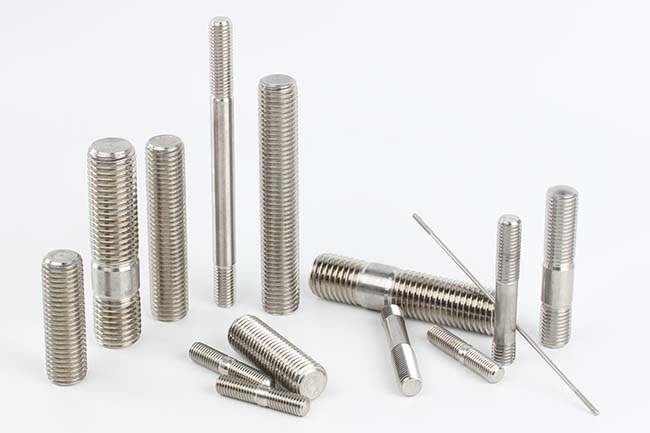
What Are ASTM A193 B8 and B8M?
ASTM A193/A193M covers alloy steel and stainless steel bolting materials and components for high-temperature, high-pressure and other special-purpose applications. Its scope includes bolting for equipment such as pressure vessels, valves, flanges and fittings. B8 and B8M are material grade designations within that specification.
Both grades are austenitic stainless steels, but their chemical compositions differ. B8 is associated with Type 304. B8M is associated with Type 316, which contains molybdenum. That addition is relevant when the assembly faces conditions that can cause localized corrosion. The grade name alone does not establish an allowable operating temperature, joint load or service life.
These grades can be supplied in different bolting forms. Explore stainless steel studs and threaded rods, then specify the exact product geometry required by the drawing.
ASTM A193 B8 vs B8M: Key Differences
| Selection factor | Grade B8 | Grade B8M |
|---|---|---|
| Associated stainless steel type | Type 304 | Type 316 |
| Key composition difference | Chromium-nickel austenitic stainless steel | Chromium-nickel austenitic stainless steel with molybdenum |
| Localized corrosion consideration | Assess carefully where chlorides or persistent moisture are present | Generally offers greater resistance to chloride-related pitting and crevice corrosion than B8 |
| Mechanical specification | State the required B8 class | State the required B8M class |
| Purchasing risk | Assuming any “304 stud” meets ASTM A193 B8 requirements | Assuming a “316 stud” or “316L stud” automatically meets ASTM A193 B8M requirements |
Use this comparison to narrow the material choice. Final selection requires the actual service conditions, the specified standard edition and the approved joint design.
How Does Molybdenum Affect Corrosion Selection?
The molybdenum associated with Type 316 improves resistance to pitting and crevice corrosion compared with Type 304 in many chloride-containing conditions. This is the main reason an engineer may evaluate B8M instead of B8 for a particular stud-bolt assembly.
However, “better chloride resistance” does not mean immunity to corrosion. Chloride concentration, temperature, stagnant liquid, deposits and tight crevices all matter. Studs beneath nuts and washers can create areas that deserve particular attention. Austenitic stainless steels can also be vulnerable to chloride stress-corrosion cracking under certain combinations of tensile stress, temperature and exposure.
For a coastal installation, first establish whether the studs face occasional atmospheric exposure, regular salt spray or direct contact with a process fluid. Those are different conditions. For a chemical plant, identify the actual medium and cleaning agents. Do not select B8M solely because the project is described as “marine” or “chemical.” Where Type 316 resistance is insufficient, the project may require evaluation of another alloy.
Grade and Class Are Separate Decisions
B8 versus B8M identifies the material grade. Class identifies additional processing and mechanical requirements. An RFQ that says only “ASTM A193 B8M studs” may therefore leave a critical specification unresolved.
Class 1 and Class 2 should not be treated as interchangeable. Class 2 involves strain hardening and different mechanical requirements from the solution-treated condition associated with Class 1. The requirements must be checked for the ordered grade, size and ASTM edition. Do not assume that B8M is mechanically stronger than B8 simply because its corrosion resistance is generally better.
If an existing drawing specifies B8 Class 2, a proposed B8M Class 1 substitution needs engineering review. The change affects both the material choice and the mechanical condition. The same review applies when changing the class without changing the grade.
Which Grade Fits the Application?
| Project condition | Selection approach |
|---|---|
| Controlled environment with an approved Type 304 bolting specification | Check whether the specified B8 class meets the joint’s mechanical and exposure requirements. |
| Exposure where chloride pitting or crevice corrosion is a concern | Evaluate B8M against the actual medium, temperature, crevices and maintenance conditions. |
| High-temperature or high-pressure flange assembly | Follow the equipment code and approved bolting specification; do not select on corrosion resistance alone. |
| Replacement of an existing stud | Match the drawing’s grade, class, dimensions, nut specification and documentation requirements. |
| Severe chloride or chemical exposure | Have the material reviewed; neither B8 nor B8M should be assumed suitable without an assessment. |
These are review paths, not automatic grade approvals. Pressure, temperature and corrosion requirements must be considered together.
Check the Complete Stud-Bolt Assembly
ASTM A193/A193M identifies bolting material requirements, but a usable stud-bolt specification needs more detail. Provide the thread system and pitch, diameter, overall length, threaded length where applicable, end configuration and any drawing tolerances. Confirm whether the quoted quantity refers to studs only or complete sets with nuts and washers.
Specify the approved mating nut grade rather than asking for a generic “stainless nut.” The nut’s material, strength requirements, dimensions and thread fit must suit the stud and the joint design. If a coating or lubricant is required, account for its effect on assembly friction and the tightening procedure.
Stainless threads can gall during assembly. Nut selection, surface condition, lubrication and installation method should therefore be considered as part of the joint specification. A material change may require a review of the existing tightening instructions.
B8 and B8M Stud Bolt RFQ Checklist
- Material standard: ASTM A193/A193M and the edition required by the project.
- Complete designation: B8 or B8M, including the required class.
- Product form: stud bolt, double-end stud, threaded rod or another drawing-defined component.
- Dimensions: diameter, thread designation, pitch, length, end form and critical tolerances.
- Mating components: approved nut grade, number of nuts per stud and washer specification.
- Service conditions: operating temperature, pressure, process medium and external exposure.
- Surface and assembly: finish, cleaning, lubricant and tightening requirements, if specified.
- Inspection: required material certificate, mechanical tests, dimensional checks and thread checks.
- Traceability: marking, batch identification, packaging and document requirements.
- Order details: quantity and delivery destination.
A material certificate should identify the material and applicable test results for the ordered specification. Agree on the inspection and documentation scope before production or sourcing. See fastener quality control and inspection for the information to include with an inquiry.
Frequently Asked Questions
Is B8M always the better choice than B8?
No. B8M generally offers greater resistance to certain forms of localized corrosion, but the appropriate choice depends on the environment, mechanical class, design requirements and project specification. B8M is not a universal upgrade.
Can a regular 316 stainless steel stud be sold as A193 B8M?
Its material description alone is insufficient. The stud must meet the applicable ASTM A193/A193M requirements for the ordered grade and class, with the specified testing and documentation.
Does B8M mean 316L?
Do not assume that B8M and a generic 316L designation are interchangeable. If a project requires a particular low-carbon composition or dual certification, state that requirement and verify it against the applicable specification and material certificate.
Can B8M Class 1 replace B8 Class 2?
Not automatically. The proposed change involves both material grade and class. Have the mechanical properties, corrosion conditions and joint design reviewed before approving it.
Do both grades need matching nuts?
Yes. The purchase specification should identify an approved nut grade, dimensions and thread that suit the selected stud. A nut should not be accepted solely because it can be threaded onto the stud.
Conclusion
For ASTM A193 B8 vs B8M, choose the material grade according to the actual corrosion environment, then confirm the class and mechanical requirements for the joint. Complete the decision with stud dimensions, approved mating nuts, assembly conditions and inspection documents.
IIIBEAR provides information on B8 and B8M stud-bolt product forms. To discuss a drawing or BOM, send your stud-bolt inquiry with the full designation and service conditions.

