Custom stainless steel fasteners are an important sourcing option when standard screws, bolts, nuts, washers, studs, or threaded components cannot meet a project's dimensional, corrosion-resistance, assembly, or performance requirements. For engineers and purchasing teams, successful customization depends on more than selecting stainless steel. Material grade, thread specification, tolerance, geometry, surface treatment, production process, and application conditions should all be defined before production begins.
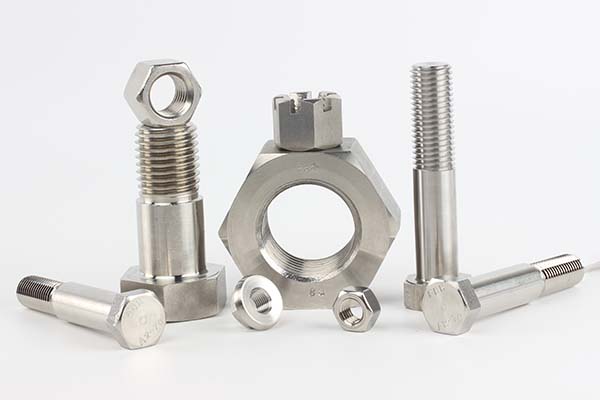
Whether the requirement involves a modified standard fastener or a completely non-standard component made from a drawing, a clear technical specification helps reduce sourcing risk and makes quotations more accurate. This guide explains the main factors B2B buyers should evaluate when purchasing custom stainless steel fastening components.
What Buyers Should Know Before Ordering Custom Fasteners
Standard fasteners are efficient when established DIN, ISO, ANSI, ASME, or other dimensional specifications match the application. However, industrial assemblies frequently require features that are not available in standard catalogs. A project may need a special head shape, unusual thread length, reduced shank, shoulder section, captive feature, special point, non-standard diameter, tighter dimensional tolerance, or a combination of several features.
In these cases, working from a detailed drawing is normally the most practical approach. Buyers should identify which dimensions are critical to assembly and which dimensions can follow normal manufacturing tolerances. This distinction can help avoid unnecessary complexity while keeping the component suitable for its intended function.
Why Choose Custom Stainless Steel Fasteners?
Custom stainless steel fasteners are commonly selected when both corrosion resistance and application-specific geometry are important. Stainless steel is widely used in equipment, machinery, construction systems, food-processing equipment, transportation assemblies, outdoor installations, electrical systems, and other environments where ordinary carbon steel may not be the preferred material.
Customization also allows buyers to consolidate functions. For example, a special screw may incorporate an extended shoulder, an unusual drive, or a controlled unthreaded section that would otherwise require several separate components. For OEM projects, this can support more efficient assembly and better compatibility with the surrounding parts.
Selecting the Right Stainless Steel Grade
Material selection should be based on the working environment rather than simply requesting "stainless steel." Different grades provide different combinations of corrosion resistance, mechanical properties, machinability, magnetic behavior, and cost.
304 and A2 Stainless Steel
304 stainless steel and commonly specified A2 stainless fastener grades are frequently used for general industrial applications. They provide good corrosion resistance for many indoor and outdoor environments and are widely available for screws, bolts, nuts, washers, and other threaded products.
For general equipment manufacturing, architectural assemblies, enclosures, and many commercial products, 304 or A2 material can be a practical starting point. The final choice should still consider chemicals, moisture, temperature, and the surrounding materials.
316 and A4 Stainless Steel
316 stainless steel and A4 stainless fasteners are often considered for more demanding corrosive environments, including applications exposed to salt, moisture, or certain chemicals. Buyers sourcing stainless steel bolts and nuts for coastal equipment, marine-related assemblies, chemical-processing equipment, or outdoor systems may specify 316 when additional corrosion resistance is required.
Material grade should be clearly stated on drawings and purchase documents because visual appearance alone cannot confirm the stainless steel composition.
Other Stainless Steel Options
Some applications may require martensitic or precipitation-hardening stainless steels when the project places greater emphasis on strength, hardness, wear resistance, or specific mechanical characteristics. Grades such as 410 or 17-4 PH may be considered for certain engineered components, depending on design requirements.
When using these materials, buyers should evaluate corrosion performance, heat-treatment requirements, forming capability, and machining requirements together rather than treating them as direct substitutes for 304 or 316.
Key Specifications for Custom Screws and Bolts
A complete RFQ for custom screws and bolts should provide enough information for the supplier to understand both the component geometry and the expected application. A dimensional drawing in PDF format is useful for quotation, while 2D CAD or 3D models may provide additional information for complex parts.
Important specifications can include:
- Fastener type and overall geometry
- Stainless steel grade
- Metric or inch thread specification
- Thread pitch or threads per inch
- Thread length and engagement requirements
- Head diameter, head height, and drive style
- Shank diameter and shoulder dimensions
- Point configuration
- Critical tolerances
- Surface finish or coating requirements
- Quantity and expected repeat demand
- Packaging or identification requirements
For a non-standard component, marking critical dimensions on the drawing helps the manufacturer understand which features have the greatest influence on assembly performance.
Manufacturing Methods for Precision Stainless Steel Fasteners
The correct manufacturing route depends on component geometry, quantity, material, tolerance, and cost objectives. Common production methods for precision stainless steel fasteners include cold forming, thread rolling, CNC turning, CNC machining, stamping, and secondary machining operations.
High-volume parts with suitable geometry may benefit from forming processes, while complex components or lower-volume prototypes may require machining. Some custom parts use a combination of processes. For example, a basic fastener body may be formed first and then receive secondary machining to produce a special shoulder, slot, hole, groove, or reduced section.
Thread production should also be considered. Rolled threads and cut threads are produced differently and may be selected according to component design, material condition, quantity, and manufacturing requirements. Buyers with specific thread requirements should clearly identify the applicable thread standard and tolerance class.
Surface Finishes and Treatments for Stainless Steel Fasteners
Although stainless steel is generally selected for its corrosion resistance, additional surface processing may still be specified for cleanliness, appearance, assembly performance, or application requirements.
Passivation is commonly associated with stainless steel components and may be specified when the application requires an appropriate surface treatment after manufacturing. Electropolishing may be considered where a smoother, cleaner surface or particular appearance is required. Other functional coatings or lubricating treatments can also be specified when needed for assembly or service conditions.
Stainless steel threaded assemblies can be susceptible to galling under certain conditions. For applications where repeated installation, high assembly speed, or significant thread friction is expected, buyers should discuss thread condition, lubrication, coating, and installation procedures during the sourcing process.
Standard Fasteners vs. Made-to-Order Fasteners
Not every project requires a fully customized product. In many cases, the most economical solution is to begin with a standard fastener and add secondary operations. A standard bolt may only need a shortened thread, drilled hole, special point, modified head, or machined shoulder.
Fully made-to-order fasteners become more attractive when the required dimensions differ substantially from standard products or when several special features must be integrated into one component. Buyers should therefore provide both the desired drawing and information about the application so the sourcing team can determine whether a modified standard part or a completely custom product is more appropriate.
How to Evaluate a Stainless Steel Fastener Manufacturer
When evaluating a stainless steel fastener manufacturer or sourcing partner, purchasing teams should look beyond the unit price. The supplier should be able to review drawings, clarify material and thread requirements, identify unclear tolerances, and communicate which specifications affect manufacturability.
Buyers should also consider whether the supplier can support both standard and custom items. Many OEM projects require a mixture of catalog fasteners and special components, so consolidating suitable products with one sourcing partner may simplify purchasing and communication.
For buyers looking to source standard products together with custom stainless steel components, IIIBEAR can be included in supplier evaluations for projects involving screws, bolts, nuts, washers, threaded parts, and other industrial fastener requirements.
Information to Include in a Custom Fastener RFQ
A well-prepared RFQ can significantly improve communication during the quotation process. Instead of sending only a product name or photograph, provide a drawing together with the expected material, quantity, and application requirements.
The RFQ should clearly indicate whether the requested dimensions are fixed or whether alternative dimensions can be considered for manufacturability. It is also useful to state whether the order is for prototype evaluation, initial production, or ongoing purchasing. This information helps the supplier assess an appropriate manufacturing approach.
If the component must match an existing assembly, identify the mating thread, hole, component, or installation interface. For replacement projects, physical samples may also help clarify dimensions that are difficult to communicate from photographs alone.
Final Considerations for Sourcing Custom Stainless Steel Fasteners
Sourcing custom stainless steel fasteners successfully requires a balance between material performance, dimensional accuracy, manufacturability, application requirements, and purchasing cost. Selecting 304, 316, or another stainless steel grade is only the beginning. Thread specification, tolerance, surface condition, manufacturing method, and assembly environment should all be considered before finalizing the order.
For OEMs, equipment manufacturers, distributors, and industrial sourcing teams, the most effective approach is to prepare a complete technical package and discuss critical requirements before production. Clear drawings and realistic specifications make it easier to compare quotations, reduce misunderstandings, and source custom fastening components that fit the intended assembly.
Related products: Special Material Fasteners

