18-8 vs 304 stainless steel fasteners can be confusing because the two terms are often used as if they describe exactly the same material. In many commercial fastener applications they may refer to very similar austenitic stainless steels, but they are not technically identical designations. “18-8” is a general description for stainless steels containing approximately 18% chromium and 8% nickel, while 304 is a specific stainless steel grade with defined chemical composition requirements.
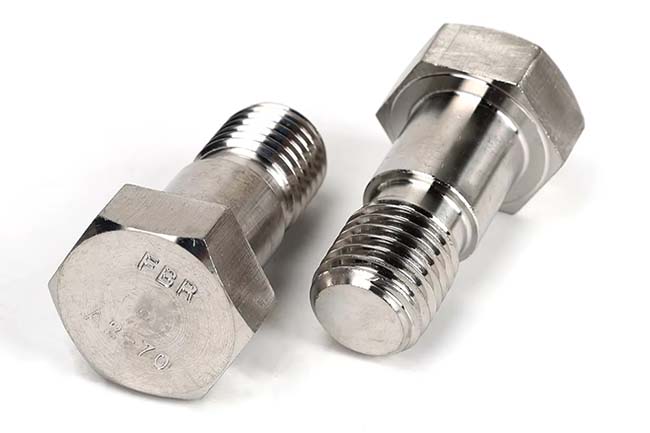
For engineers, OEM buyers, fastener distributors, and procurement specialists, this distinction matters when drawings, material certificates, mechanical requirements, or corrosion conditions must be controlled. Understanding what each designation means can prevent purchasing specifications from becoming unnecessarily vague.
What Does 18-8 Stainless Steel Mean?
18-8 stainless steel is a general industry term rather than one single alloy grade. The name refers approximately to the chromium and nickel content commonly found in several 300-series austenitic stainless steels.
Fasteners sold as 18-8 stainless steel are widely used for general corrosion-resistant applications. Depending on the applicable product specification and manufacturer, the material may correspond to grades such as 302, 304, or other closely related austenitic stainless steels.
This is why an RFQ that states only “18-8 stainless steel” may not provide enough information for applications where an exact alloy designation is required.
18-8 stainless materials are frequently used for industrial screws, bolts, nuts, washers, machine components, enclosures, and general-purpose equipment.
What Is 304 Stainless Steel?
304 is a specific chromium-nickel austenitic stainless steel grade. It is one of the most commonly specified stainless steels for industrial fasteners because it combines good general corrosion resistance, manufacturing versatility, and broad applicability.
Unlike the broader 18-8 description, specifying 304 identifies a defined alloy grade. This makes the requirement clearer when material traceability or conformity to a particular material specification is important.
304 stainless steel is commonly used for stainless steel bolts, machine screws, socket screws, nuts, washers, threaded components, equipment hardware, and custom fasteners.
18-8 vs 304 Stainless Steel Fasteners Comparison
| Factor | 18-8 Stainless Steel Fasteners | 304 Stainless Steel Fasteners |
|---|---|---|
| Type of designation | General composition-based description | Specific stainless steel grade |
| Material definition | May cover several related 300-series stainless steels | Defined alloy composition |
| Typical alloy family | Austenitic stainless steel | Austenitic stainless steel |
| General corrosion resistance | Good, depending on the actual alloy | Good for many industrial environments |
| Procurement precision | Less specific | More specific |
| Best use in technical drawings | Only when the broader designation is acceptable | Preferred when 304 is specifically required |
Is 18-8 Stainless Steel the Same as 304?
Not exactly.
304 stainless steel falls within the general composition range commonly associated with the term 18-8, which explains why the names are frequently used interchangeably in commercial fastener markets. However, 18-8 does not automatically guarantee that the material is specifically Grade 304.
A supplier may describe a general-purpose stainless steel fastener as 18-8 because the product is manufactured from an appropriate 300-series alloy. If an engineering drawing specifically calls for 304, purchasing personnel should not assume that every product labeled 18-8 automatically satisfies that requirement.
The material specification, fastener standard, and required documentation should determine whether substitution is acceptable.
How Does 18-8 Compare With 304 for Corrosion Resistance?
Both 18-8-type stainless steels and 304 stainless steel generally provide good corrosion resistance in normal atmospheric and many industrial environments. They are frequently used for indoor machinery, food equipment, architectural components, enclosures, electronics, and protected outdoor equipment.
However, actual corrosion resistance depends on the specific alloy represented by the 18-8 designation. Environment is also critical. Chlorides, salt deposits, elevated temperatures, cleaning chemicals, crevices, and surface contamination can significantly affect stainless steel performance.
For applications with substantial chloride exposure, 316-type stainless steel may offer better resistance to pitting and crevice corrosion than typical 18-8 or 304 materials. Buyers comparing materials for these conditions can review 304 vs 316 stainless steel fasteners.
Does 304 Have Different Strength From 18-8?
The terms 18-8 and 304 alone do not define the complete mechanical strength of a finished fastener.
Fastener strength is influenced by the applicable standard, alloy, manufacturing condition, cold working, diameter, and specified property class. Therefore, buyers should not determine allowable load or tightening requirements simply from an “18-8” or “304” description.
For metric corrosion-resistant stainless steel fasteners, ISO 3506 uses material groups and property classes such as A2-70 or A2-80. A2 is a stainless steel group commonly associated with 304-type materials, while the number identifies a mechanical property class.
A2 should also not be treated as an exact synonym for 304. When an exact material grade is mandatory, it should be specified separately together with the applicable fastener requirements.
What Standards Should Buyers Specify?
A complete fastener specification normally requires more than a material description. Depending on the product and market, the purchase requirement may refer to DIN, ISO, ASTM, ASME, or another recognized standard.
For example, a stainless steel hex bolt specification should distinguish between dimensional requirements and material or mechanical property requirements. A dimensional standard defines features such as head geometry, diameter, and length, while a material or mechanical standard controls other performance requirements.
Buyers should avoid assuming that DIN, ISO, ASTM, and ASME designations are automatically interchangeable. Each standard should be reviewed according to the application and drawing requirements.
When Is an 18-8 Specification Appropriate?
An 18-8 stainless steel specification may be sufficient for general commercial applications where the engineering requirement allows a broader 300-series stainless material and an exact alloy grade is not critical.
Typical applications may include:
- General equipment assembly
- Indoor machinery
- Electrical enclosures
- Furniture and commercial equipment
- General architectural hardware
- Moderate outdoor environments
In these cases, the broader designation may provide purchasing flexibility. Buyers should still confirm the applicable fastener standard, dimensions, threads, and mechanical requirements.
When Should Buyers Specify 304 Instead?
304 should be specified when engineering documentation requires a defined alloy rather than a general stainless steel family description.
This is particularly important when:
- The drawing specifically states 304 stainless steel
- Material traceability is required
- A material certificate must identify the alloy grade
- The application has controlled corrosion requirements
- The product must conform to a defined customer specification
- Supplier-to-supplier material consistency is important
Using a precise grade can help purchasing teams compare quotations more effectively because suppliers are quoting against the same material requirement.
What About Nuts and Washers?
Material compatibility should be considered across the complete bolted joint rather than only the bolt or screw.
If an assembly uses stainless bolts, buyers should also review the material and specification of the mating industrial nuts and fastener washers. Mechanical compatibility, corrosion conditions, dimensional standards, and assembly behavior all affect joint performance.
Stainless-to-stainless threaded joints can also experience galling. Thread condition, assembly speed, lubrication where appropriate, tightening procedures, and mating material combinations should be considered during installation planning.
How to Specify 18-8 or 304 Fasteners in an RFQ
For B2B sourcing, a complete request for quotation should normally include:
- Fastener type: bolt, screw, nut, washer, stud, or custom component
- Applicable DIN, ISO, ASTM, ASME, or customer standard
- Exact material requirement, such as 304, when required
- Whether a general 18-8 stainless designation is acceptable
- Required mechanical property class or condition
- Diameter and length
- Thread system, pitch, and tolerance
- Head style and drive type
- Surface finish or passivation requirements
- Inspection and material documentation requirements
- Quantity and packaging requirements
When dimensions or functional requirements fall outside standard products, the RFQ should also include a controlled 2D drawing or 3D model with critical dimensions, tolerances, thread specifications, material, and surface requirements.
18-8 or 304: Which Should You Choose?
If the application only requires a general-purpose austenitic stainless steel fastener and the engineering specification permits 18-8 material, the broader designation may be suitable. If the drawing or quality system requires a specific material grade, 304 should be clearly stated instead.
The key procurement lesson is that 18-8 describes a broader stainless steel category, while 304 identifies a specific alloy grade. They overlap, but they should not automatically be treated as identical specifications.
For OEM, distribution, and industrial sourcing projects, IIIBEAR supplies standard and custom fasteners in stainless steel and other materials according to specified dimensions, threads, standards, and application requirements.
Related products: Special Material Fasteners

