304 vs 316 stainless steel fasteners is one of the most important material comparisons for engineers and purchasing teams specifying corrosion-resistant bolts, screws, nuts, studs, and other threaded components. Both grades belong to the austenitic stainless steel family and provide good corrosion resistance for many industrial applications, but 316 contains molybdenum, which generally improves resistance to pitting and crevice corrosion in chloride-containing environments.
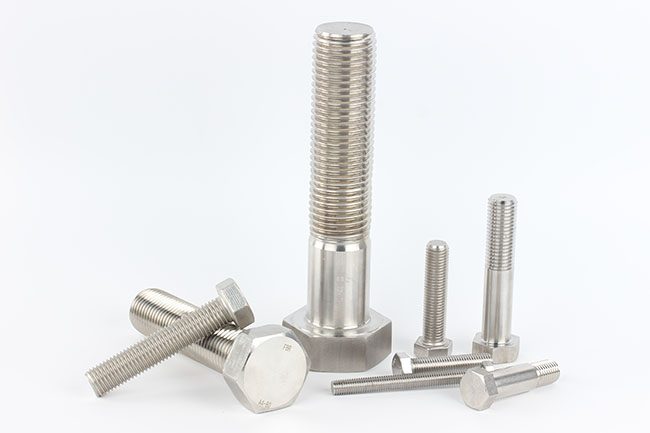
The correct choice should not be based on the assumption that 316 is always better. Environment, mechanical requirements, fastener standard, property class, thread, surface condition, quantity, and total procurement cost should all be considered. This guide explains the practical differences between 304 and 316 stainless steel fasteners and how B2B buyers can specify the right material for their application.
What Are 304 Stainless Steel Fasteners?
304 stainless steel is a widely used chromium-nickel austenitic stainless steel. Fasteners manufactured from 304 or related 304-type stainless grades are commonly selected for equipment, machinery, architectural assemblies, enclosures, food-processing equipment, general outdoor applications, and many other environments where moderate corrosion resistance is required.
For standard and custom components, buyers can source 304 stainless steel in many configurations, including industrial bolts, stainless steel screws, nuts, washers, threaded rods, and special fasteners manufactured to drawings.
304 offers a useful combination of corrosion resistance, formability, availability, and commercial efficiency. However, its performance can become less reliable when fasteners are continuously exposed to seawater, salt deposits, de-icing chemicals, or other chloride-rich conditions.
What Are 316 Stainless Steel Fasteners?
316 stainless steel is also an austenitic stainless steel, but its composition includes molybdenum. This addition is the main reason 316 generally provides better resistance than 304 to localized corrosion caused by chlorides.
316 fasteners are therefore frequently considered for coastal equipment, water treatment systems, chemical processing equipment, pumps, valves, offshore-related assemblies, and other applications where moisture may contain significant chloride concentrations.
IIIBEAR also lists stainless steel studs and threaded rods in 304, 316, and related grades for industrial fastening requirements.
304 vs 316 Stainless Steel Fasteners: Key Differences
| Factor | 304 Stainless Steel Fasteners | 316 Stainless Steel Fasteners |
|---|---|---|
| Alloy type | Austenitic chromium-nickel stainless steel | Austenitic chromium-nickel-molybdenum stainless steel |
| General corrosion resistance | Good for many industrial environments | Good, with improved performance in many aggressive environments |
| Chloride resistance | More susceptible to chloride-induced pitting | Generally better resistance due to molybdenum |
| Typical applications | Machinery, enclosures, architectural equipment, general industrial use | Marine-related, chemical, water treatment, coastal and chloride-exposed equipment |
| Relative material cost | Usually lower | Usually higher |
| Common ISO fastener family | Often associated with A2 grades | Often associated with A4 grades |
Corrosion Resistance Is Usually the Main Selection Factor
The most important practical difference between 304 and 316 is normally their behavior in corrosive environments. Both rely on a chromium-rich passive surface film for corrosion resistance. However, chloride ions can locally damage this passive layer and contribute to pitting or crevice corrosion.
The molybdenum in 316 improves resistance to these forms of localized corrosion. For that reason, 316 may be a more appropriate starting point where fasteners encounter salt spray, seawater contamination, chloride-containing process fluids, or repeated chemical washdown.
Neither alloy should be described as corrosion-proof. Temperature, chloride concentration, acidity, oxygen availability, deposits, crevices, surface contamination, and joint design can all influence actual service performance. Buyers working with demanding environments may also benefit from reviewing guidance on improving stainless steel screw corrosion resistance.
Does 316 Stainless Steel Have Higher Mechanical Strength?
Not necessarily. Selecting 316 instead of 304 should not automatically be interpreted as selecting a stronger fastener.
Fastener strength depends on the applicable material specification, manufacturing condition, property class, dimensions, and product standard. For metric corrosion-resistant stainless steel bolts, screws, and studs, ISO 3506 is an important reference. Designations such as A2-70 and A4-70 combine a stainless steel grade group with a mechanical property class.
A2 is commonly associated with 304-type stainless steels, while A4 is commonly associated with molybdenum-bearing 316-type stainless steels. These designations should not be treated as simple one-to-one substitutes for commercial alloy names. The complete standard and specified property class should be checked when mechanical performance is important.
304 and 316 Under ASTM Specifications
For projects using ASTM requirements, buyers should specify the correct ASTM standard rather than ordering only by stainless steel grade.
For example, ASTM F593 covers stainless steel bolts, hex cap screws, and studs for applications requiring general corrosion resistance and includes alloy groups containing 304 and 316 stainless steels. For certain high-temperature or high-pressure bolting applications, ASTM A193 may be relevant. Under ASTM A193, B8 is associated with Type 304 stainless steel and B8M with Type 316 stainless steel, subject to the requirements and classes defined by the specification.
ASTM A193 B8 and B8M stainless steel hex bolts illustrate why the material grade, specification, class, dimensions, and service conditions should be stated together on an RFQ.
When Should You Choose 304 Stainless Steel Fasteners?
304 is often a practical choice when the operating environment is relatively mild and chloride exposure is limited. Typical examples include indoor machinery, cabinets, equipment frames, production equipment, commercial products, and protected outdoor assemblies.
For purchasing teams managing large volumes, 304 may also provide a more economical material solution when the additional corrosion resistance of 316 is not technically required.
However, the lowest initial fastener price should not be the only purchasing criterion. Replacement labor, equipment downtime, inspection requirements, accessibility, and the consequence of corrosion should be considered when comparing total service cost.
When Should You Choose 316 Stainless Steel Fasteners?
316 should receive stronger consideration when an assembly faces chloride exposure or a more aggressive corrosive environment. Typical applications include coastal installations, water treatment equipment, pumps and valves, chemical processing systems, outdoor equipment exposed to salt, and some marine-related assemblies.
Even in these applications, 316 should not be specified automatically without reviewing the actual chemical and environmental conditions. Extremely aggressive media, elevated temperatures, severe crevice conditions, or specialized process environments may require duplex stainless steel, nickel alloys, titanium, or another material system.
Do Stainless Steel Fasteners Need Coatings?
Many 304 and 316 fasteners are supplied with a natural stainless steel surface rather than a protective metallic coating. Depending on the specification, cleaning or passivation may be requested to improve surface cleanliness and support the formation of a consistent passive layer.
Additional coatings may sometimes be specified for appearance, friction control, anti-galling performance, or specialized corrosion requirements. The coating must be compatible with the fastener material and application rather than selected only because it offers a higher nominal corrosion rating.
Watch for Galling in Stainless-to-Stainless Assemblies
Austenitic stainless steel threaded fasteners can be susceptible to galling, particularly when stainless bolts and nuts are assembled rapidly or under high friction conditions. Galling can damage threads, increase installation torque, or cause the nut and bolt to seize.
Appropriate thread condition, controlled installation speed, suitable lubrication where permitted, correct tolerances, and proper tightening procedures can help reduce this risk. Procurement specifications should therefore consider assembly requirements in addition to corrosion resistance.
What B2B Buyers Should Include in an RFQ
Whether purchasing 304 or 316 stainless steel fasteners, a clear RFQ reduces uncertainty and makes supplier quotations easier to compare. Buyers should normally define:
- Fastener type: bolt, screw, nut, stud, washer, or special component
- Applicable DIN, ISO, ASTM, ANSI, ASME, or drawing requirement
- Stainless steel grade or specified fastener material designation
- Required property class, condition, or ASTM class where applicable
- Diameter, length, thread pitch, and thread system
- Head style and drive type
- Dimensional and thread tolerances
- Surface finish, passivation, coating, or lubrication requirements
- Operating environment and important corrosion conditions
- Inspection and documentation requirements
- Order quantity and packaging requirements
When standard components cannot meet the assembly requirement, a custom stainless steel fastener sourcing specification can also define critical dimensions, tolerances, special threads, head geometry, surface treatment, and drawing-controlled features.
How to Make the Final Choice
For many general industrial applications, 304 stainless steel provides an effective balance of corrosion resistance and procurement cost. When chloride exposure, coastal conditions, or more aggressive process environments increase the risk of localized corrosion, 316 often provides an important performance advantage.
The final material decision should still be made together with the required fastener standard and mechanical property class. A 304 or 316 designation alone does not fully define a finished fastener.
For OEM, industrial, and distribution requirements, IIIBEAR supplies standard and custom fasteners for projects requiring different stainless steel grades, dimensions, threads, standards, and application-specific configurations.
Related products: Special Material Fasteners

