Titanium Grade 5 fasteners are high-performance fastening components used in applications requiring a combination of low weight, high strength, excellent corrosion resistance, and long-term reliability. Also known as Ti-6Al-4V or UNS R56400, Grade 5 titanium is one of the most widely used titanium alloys for industrial fasteners.
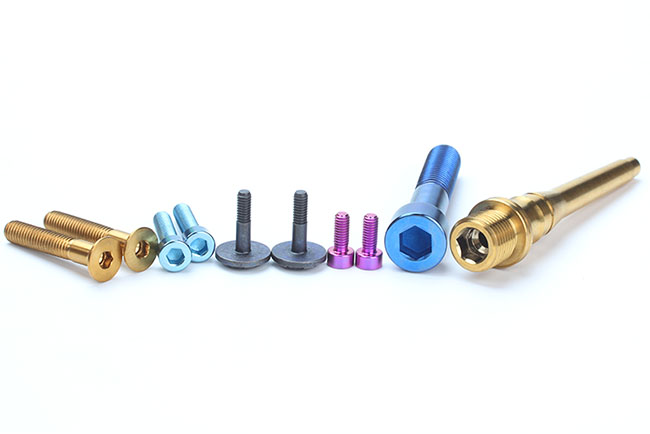
For engineers, OEM designers, and procurement specialists, titanium Grade 5 fasteners provide advantages over stainless steel and nickel alloys in applications where weight reduction, corrosion resistance, and mechanical performance are critical. However, titanium fasteners require careful consideration of material compatibility, thread design, installation practices, and application conditions.
What Are Titanium Grade 5 Fasteners?
Titanium Grade 5 fasteners are bolts, screws, nuts, studs, washers, and custom components manufactured from Ti-6Al-4V titanium alloy.
Grade 5 titanium contains aluminum and vanadium additions that improve strength compared with commercially pure titanium grades. It combines relatively low density with high mechanical performance, making it suitable for industries where reducing component weight is important.
Common Titanium Grade 5 fastener products include:
- Hex bolts
- Socket head cap screws
- Machine screws
- Stud bolts
- Threaded rods
- Nuts and washers
- Custom titanium fasteners
For projects requiring specialized materials, buyers can review particular materials fasteners for additional alloy options.
What Is Ti-6Al-4V Titanium?
Ti-6Al-4V is a titanium alloy containing approximately 6% aluminum and 4% vanadium. It belongs to the alpha-beta titanium alloy family and is widely used because of its balance of strength, corrosion resistance, and manufacturing versatility.
The alloy is commonly identified by several designations:
- Grade 5 Titanium
- Ti-6Al-4V
- UNS R56400
- ASTM Grade 5 Titanium
Compared with commercially pure titanium, Grade 5 provides higher strength while maintaining titanium’s well-known corrosion resistance and low density.
Why Choose Titanium Grade 5 Fasteners?
Titanium Grade 5 fasteners are selected when standard stainless steel or alloy steel fasteners cannot provide the required combination of performance characteristics.
Key advantages include:
- High strength-to-weight ratio
- Excellent corrosion resistance
- Low material density
- Good performance in marine environments
- Resistance to many industrial chemicals
- Non-magnetic characteristics
- Good fatigue performance in suitable applications
These advantages make titanium fasteners valuable in aerospace, marine, chemical, racing, medical, and specialized industrial applications.
Titanium Grade 5 Fasteners vs Stainless Steel Fasteners
| Factor | 316 Stainless Steel Fasteners | Titanium Grade 5 Fasteners |
|---|---|---|
| Material family | Austenitic stainless steel | Alpha-beta titanium alloy |
| Density | Higher | Lower |
| Strength-to-weight ratio | Good | Very high |
| Corrosion resistance | Excellent in many environments | Excellent in many marine and chemical environments |
| Magnetic behavior | Generally low magnetic response | Non-magnetic |
| Material cost | Lower | Higher |
Titanium Grade 5 should not replace stainless steel in every application. Stainless steel remains a practical choice for many industrial environments where cost efficiency and availability are important. Titanium is generally selected when weight reduction, corrosion resistance, or specialized performance requirements justify the additional cost.
Corrosion Resistance of Titanium Grade 5 Fasteners
One of the main reasons titanium fasteners are selected is their strong corrosion resistance. Titanium naturally forms a stable oxide layer that protects the surface in many environments.
Titanium Grade 5 fasteners are commonly considered for:
- Seawater applications
- Marine equipment
- Chemical processing systems
- Desalination equipment
- Outdoor environments
- Applications requiring long service life
However, titanium is not resistant to every chemical environment. Strong reducing acids, certain high-temperature conditions, and specific chemical combinations may require alternative materials. Material selection should always be based on actual service conditions.
Mechanical Properties of Titanium Grade 5 Fasteners
The main mechanical advantage of Grade 5 titanium is its high strength compared with its low density.
Important mechanical characteristics include:
- High tensile strength
- Excellent strength-to-weight ratio
- Good fatigue resistance
- Useful performance across a wide temperature range
The final mechanical properties depend on manufacturing condition, heat treatment, product dimensions, and applicable specifications.
For critical applications, purchasing documents should clearly define:
- Material grade
- Heat treatment condition when required
- Mechanical property requirements
- Inspection requirements
Applications of Titanium Grade 5 Fasteners
Aerospace Applications
Aerospace industries often require lightweight components with high mechanical performance. Titanium Grade 5 fasteners are commonly used where reducing weight while maintaining strength is important.
Marine Equipment
Marine environments expose fasteners to seawater, salts, and moisture. Titanium Grade 5 can provide excellent corrosion resistance for selected marine applications.
Chemical Processing Equipment
Chemical systems may require materials that resist aggressive fluids while maintaining mechanical reliability. Titanium fasteners can be considered for specific chemical environments.
Racing and Performance Equipment
Motorsport and performance applications often use titanium fasteners because reducing weight can improve overall system efficiency.
Medical and Specialized Equipment
Titanium’s corrosion resistance and biocompatibility characteristics make titanium alloys important in certain medical and specialized engineering applications.
Titanium Grade 5 Fastener Standards
When sourcing titanium Grade 5 fasteners, buyers should specify the applicable material and product requirements clearly.
Common references include:
- UNS R56400
- ASTM B348 Titanium and Titanium Alloy Bars and Billets
- ASTM F136 Titanium alloy requirements for certain medical applications
- ASTM F467/F468 for nonferrous nuts and bolts in relevant applications
The correct standard depends on the product type, industry requirement, and application. Material standards, dimensional standards, and finished fastener requirements should be evaluated separately.
DIN, ISO, ASTM, and ASME standards should not be assumed interchangeable without reviewing the specific requirement.
Manufacturing Considerations for Titanium Fasteners
Titanium Grade 5 fasteners require specialized manufacturing knowledge because titanium behaves differently from stainless steel and conventional alloys during machining.
Important manufacturing considerations include:
- Tool selection and machining control
- Thread accuracy
- Surface protection
- Dimensional inspection
- Material traceability
- Prevention of contamination
Titanium has a tendency toward galling, especially in threaded applications. Proper thread design, surface treatment, lubrication where permitted, and controlled installation procedures are important to reduce assembly issues.
Titanium Fasteners and Galvanic Corrosion Considerations
When titanium fasteners are assembled with other metals, engineers should consider galvanic compatibility. The surrounding material, electrolyte exposure, surface area ratio, and environmental conditions can influence corrosion behavior.
For marine and outdoor applications, the complete assembly should be evaluated rather than selecting the fastener material independently.
Custom Titanium Grade 5 Fasteners
Many titanium fastener applications involve special requirements that cannot be met by standard catalog products.
Custom titanium fasteners may require:
- Special thread specifications
- Non-standard dimensions
- Custom head designs
- Weight reduction features
- Special surface treatments
- Prototype quantities
- Drawing-controlled production
For OEM projects requiring customized dimensions and materials, buyers can consider custom fastener solutions based on engineering drawings and specifications.
Procurement Checklist for Titanium Grade 5 Fasteners
A complete RFQ should include:
- Material designation: Titanium Grade 5 / Ti-6Al-4V / UNS R56400
- Fastener type and dimensions
- Applicable ASTM, DIN, ISO, or customer specification
- Thread size, pitch, and tolerance
- Mechanical property requirements
- Surface treatment requirements
- Operating environment
- Inspection and testing requirements
- Material certificates
- Packaging requirements
Choosing Titanium Grade 5 Fasteners for Industrial Projects
Titanium Grade 5 fasteners provide an excellent combination of lightweight construction, strength, and corrosion resistance. They are especially suitable for aerospace, marine, chemical, and specialized industrial applications where performance requirements exceed standard fastener materials.
The correct selection requires balancing mechanical requirements, environmental exposure, material compatibility, standards, and total project cost. Titanium should be specified when its unique advantages provide measurable value for the application.
IIIBEAR supplies standard and custom fasteners in titanium, stainless steel, nickel alloys, and other special materials according to engineering drawings, standards, and industrial requirements.
Related products: Bolts, Special Material Fasteners

