Passivated stainless steel fasteners are bolts, screws, nuts, studs, washers, and other fastening components that have received a controlled chemical surface treatment to remove free iron and other contaminants from the stainless steel surface. Passivation is commonly specified when cleanliness and corrosion performance are important after machining, cold forming, thread rolling, handling, or other manufacturing operations.
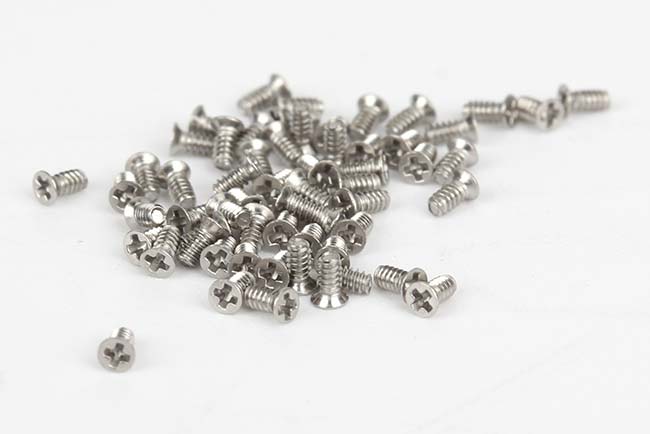
For engineers, OEM buyers, and procurement specialists, passivation should not be treated as a generic coating or a substitute for selecting the correct stainless steel grade. A properly written purchase specification should identify the fastener material, applicable standard, dimensions, passivation requirement, acceptance testing, and required documentation.
What Is Passivation of Stainless Steel Fasteners?
Stainless steel obtains its corrosion resistance primarily from a thin chromium-rich passive oxide film that forms naturally on a clean surface in the presence of oxygen. During fastener manufacturing, however, machining tools, forming equipment, grinding operations, handling, or contact with carbon steel can leave free iron and other contaminants on the surface.
Passivation is a chemical treatment intended primarily to remove this surface contamination while allowing the stainless steel surface to maintain or reform its protective passive condition.
Passivation is particularly relevant for precision stainless steel screws, bolts, machined components, and custom fasteners where manufacturing operations can introduce surface contamination.
Passivation Is Not a Protective Coating
One of the most common procurement misunderstandings is treating passivation like zinc plating, nickel plating, PTFE coating, or another deposited surface finish.
Passivation does not normally add a measurable metallic coating to the fastener. Instead, the process chemically cleans the stainless steel surface, particularly by removing exogenous iron contamination.
| Surface Treatment | Main Function | Deposited Coating? |
|---|---|---|
| Passivation | Removes free iron and surface contamination | No |
| Zinc plating | Provides sacrificial corrosion protection to suitable base metals | Yes |
| PTFE-based coating | May provide corrosion, chemical, and friction-control functions depending on the system | Yes |
| Electropolishing | Electrochemically removes surface material to produce a smoother, cleaner surface | No conventional deposited coating |
This distinction matters when specifying dimensions and tolerances. A plated coating can change the dimensional condition of threads or other features, while passivation is fundamentally a cleaning and chemical surface-treatment process.
Why Are Stainless Steel Fasteners Passivated?
Stainless steel bolts and screws can become contaminated during manufacturing even when the base alloy itself is suitable for the application. Sources of contamination can include carbon steel tooling, grinding particles, shop dust, handling equipment, or mixed-material processing environments.
If iron contamination remains on the surface, localized rust staining may appear and can be mistaken for corrosion of the stainless steel itself.
Passivation is therefore commonly specified to help:
- Remove free iron and certain manufacturing contaminants
- Restore a clean stainless steel surface after processing
- Reduce the risk of corrosion associated with iron contamination
- Improve surface cleanliness for demanding applications
- Support consistent surface condition across production lots
For a broader discussion of grade selection, contamination, and surface condition, buyers can review how to improve stainless steel screw corrosion resistance.
Which Stainless Steel Grades Can Be Passivated?
Passivation can be applied to different stainless steel families when the selected procedure is appropriate for the alloy and specification. Common fastener materials that may be supplied with passivation include 304, 316, precipitation-hardening grades, and other corrosion-resistant stainless steels.
The treatment should not be assumed to be identical for every stainless grade. Austenitic, martensitic, ferritic, duplex, and precipitation-hardening stainless steels can respond differently to chemical processing, so the applicable specification and alloy should be reviewed before selecting the treatment.
IIIBEAR also supplies industrial bolts in stainless steel and other materials for projects with different dimensional, mechanical, and surface-treatment requirements.
Does Passivation Make 304 Stainless Steel Perform Like 316?
No. Passivation does not change the bulk chemical composition of the fastener and does not convert one stainless steel grade into another.
A passivated 304 fastener remains 304 stainless steel. A passivated 316 fastener remains 316 stainless steel. The molybdenum content that gives 316 improved resistance to pitting in many chloride environments cannot be created through passivation.
This means alloy selection should come before surface-treatment selection. If an application has significant chloride exposure, the engineer should first determine whether 304, 316, duplex stainless steel, or another alloy is appropriate. Passivation can then be specified as an additional surface-cleanliness requirement.
Buyers comparing the two common stainless grades can review 304 vs 316 stainless steel fasteners before finalizing the material requirement.
ASTM A967/A967M for Stainless Steel Passivation
ASTM A967/A967M is an important specification for chemical passivation treatments of stainless steel parts. It covers multiple passivation treatment options and provides methods for verifying that the treatment has effectively removed contaminant iron and other exogenous matter.
Depending on the specified procedure, chemical passivation may use nitric-acid-based or citric-acid-based treatments. Buyers should not simply state “passivated” on a purchase order when a controlled process is required. The applicable standard and any required treatment or acceptance test should be identified.
ASTM A380/A380M is another relevant document covering cleaning, descaling, pickling, and passivation practices for stainless steel parts, equipment, and systems. These standards have different scopes and should not be treated as interchangeable without reviewing the project requirement.
AMS2700 for Passivation Requirements
AMS2700 is frequently encountered in aerospace and other controlled engineering supply chains. It specifies requirements for passivation processes used to remove free iron and other less noble contaminants from corrosion-resistant steel surfaces.
If a drawing calls for AMS2700, suppliers should follow the specified requirement rather than replacing it with a different passivation standard solely because another process is commercially available.
For all standards, purchasing teams should identify the required revision when the customer, drawing, or quality system requires revision-specific compliance.
Nitric Acid vs Citric Acid Passivation
Nitric and citric acid treatments can both be used within recognized stainless steel passivation procedures, depending on the applicable standard and material.
| Factor | Nitric Acid Passivation | Citric Acid Passivation |
|---|---|---|
| Purpose | Removal of free iron and surface contaminants | Removal of free iron and surface contaminants |
| Industry history | Long-established process | Widely used modern alternative |
| Process selection | Depends on alloy and specification | Depends on alloy and specification |
| Buyer requirement | Specify applicable standard when required | Specify applicable standard when required |
Purchasing teams should avoid specifying a passivation chemistry without understanding the drawing, alloy, customer requirement, and applicable standard. In many cases, defining the required standard and acceptance criteria is more useful than prescribing an incomplete process description.
Passivation vs Electropolishing
Passivation and electropolishing are also frequently confused. They are different processes.
Passivation chemically cleans the stainless surface and removes contaminating iron without intentionally removing a significant amount of base material. Electropolishing is an electrochemical process that intentionally removes a controlled amount of surface material and can reduce microscopic surface irregularities.
Electropolishing may be specified for applications requiring a smoother, cleaner, or more uniform surface, while passivation may be sufficient when the main requirement is removing manufacturing contamination. Some applications may involve both processes according to the specified procedure.
When Should Buyers Specify Passivated Fasteners?
Passivated stainless steel fasteners may be appropriate for:
- Food and beverage processing equipment
- Pharmaceutical and clean-processing equipment
- Chemical processing machinery
- Water treatment equipment
- Outdoor industrial equipment
- Precision machinery
- Equipment where surface rust staining must be minimized
- Custom-machined stainless steel components
Passivation may also be useful after machining custom fasteners because machining can introduce foreign metallic contamination. IIIBEAR provides custom stainless steel fasteners based on drawings and application-specific material, thread, dimensional, and surface requirements.
Example: Passivated 304 Stainless Steel Bolts
A 304 stainless steel bolt may be machined, cold formed, threaded, cleaned, and then passivated according to the specified process. The passivation step helps remove iron contamination introduced during manufacturing but does not change the bolt into a higher alloy grade.
Buyers with drawing-based requirements can review an example of custom 304 stainless steel passivated bolts when considering material and surface-treatment requirements.
What Should Be Included in a Passivated Fastener RFQ?
For B2B procurement, avoid sending an inquiry that states only “stainless bolt, passivated.” A complete RFQ should normally include:
- Fastener type: bolt, screw, nut, stud, washer, or custom component
- Material grade, such as 304, 316, or another specified stainless steel
- Applicable DIN, ISO, ASTM, ASME, or drawing requirement
- Diameter, length, and thread specification
- Required mechanical property class or condition
- Passivation standard, such as ASTM A967/A967M or AMS2700 when applicable
- Specific treatment requirement if defined by the drawing
- Required passivation acceptance or verification test
- Dimensional and thread tolerances
- Inspection and documentation requirements
- Quantity and packaging requirements
If the component is custom-made, include a controlled 2D drawing or 3D model showing critical dimensions, tolerances, thread details, head geometry, drive type, and any areas with special surface requirements.
What Buyers Should Remember About Passivation
Passivation is an important stainless steel surface-treatment process, but its role should be clearly understood. It removes free iron and surface contamination; it does not create a thick protective coating, increase the mechanical strength of the fastener, or turn 304 stainless steel into 316.
Effective sourcing therefore starts with the correct stainless steel grade and fastener specification. Passivation is then added when surface cleanliness and contamination control are required. The RFQ should state the applicable process standard and acceptance requirements instead of relying on an undefined request for a “passivated finish.”
For standard and custom stainless steel fastening requirements, IIIBEAR supports industrial buyers with different materials, dimensions, threads, standards, and specified surface-treatment requirements.
Related products: Special Material Fasteners

